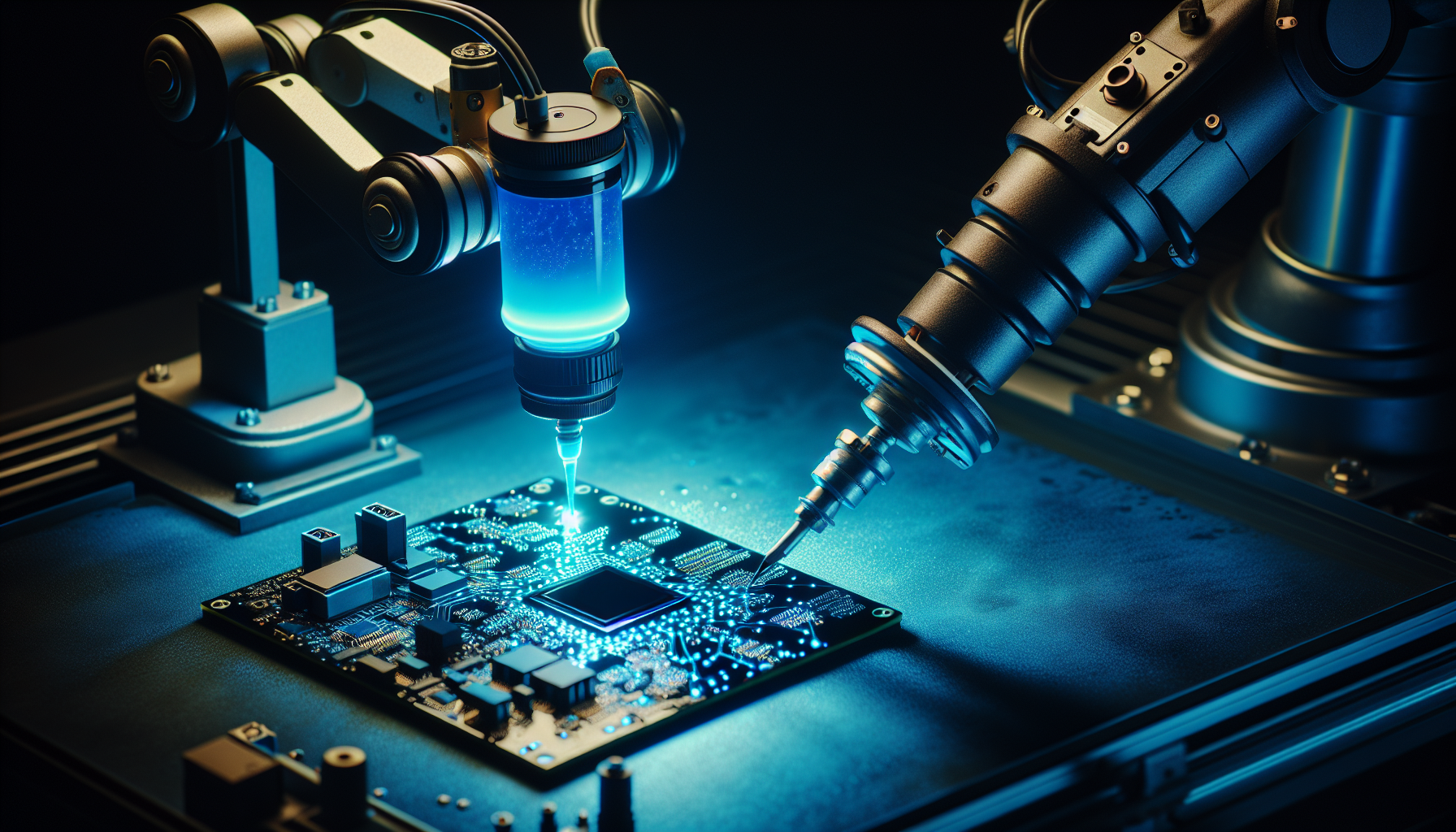
Electronics designed for the real world face threats that never appear on a laboratory bench: humidity, salt spray, chemical exposure, condensation, dust, and temperature cycling. Conformal coating is a thin protective layer applied to assembled circuit boards that shields components and conductors from these environmental hazards, dramatically extending the operating life of electronic products in demanding conditions.
What Is Conformal Coating?
Conformal coating is a thin polymeric film (typically 25-75 micrometers thick) applied to populated circuit boards after assembly. The coating conforms to the board topography, covering components, solder joints, traces, and exposed conductors with a continuous protective barrier. Unlike potting or encapsulation, which fills the entire enclosure with a rigid compound, conformal coating adds negligible weight and allows future board repair and rework.
Types of Conformal Coating
Acrylic (AR)
Acrylic coatings are the most common type for general-purpose protection. They offer good moisture resistance, easy application, and straightforward removal for rework using common solvents. Acrylic coatings cure quickly and produce minimal stress on components. They are the default choice when harsh chemical exposure is not a concern.
Silicone (SR)
Silicone coatings excel in wide temperature range applications, maintaining flexibility from -65 to +200 degrees Celsius. They absorb mechanical stress and thermal cycling better than rigid coatings. Silicone is the preferred choice for automotive electronics, outdoor equipment, and any application with extreme temperature variation.
Urethane (UR)
Urethane coatings provide excellent chemical and solvent resistance. They are harder than acrylic or silicone, providing better abrasion protection. The tradeoff is more difficult rework — urethane typically requires mechanical removal rather than solvent dissolution. Urethane is common in industrial and chemical processing environments.
Epoxy (ER)
Epoxy coatings are the hardest and most chemically resistant option. They provide a virtually impervious barrier but are extremely difficult to remove for rework. Epoxy is typically used only where rework is not anticipated and maximum environmental protection is required.
Application Methods
How the coating is applied affects coverage quality, thickness uniformity, and production throughput.
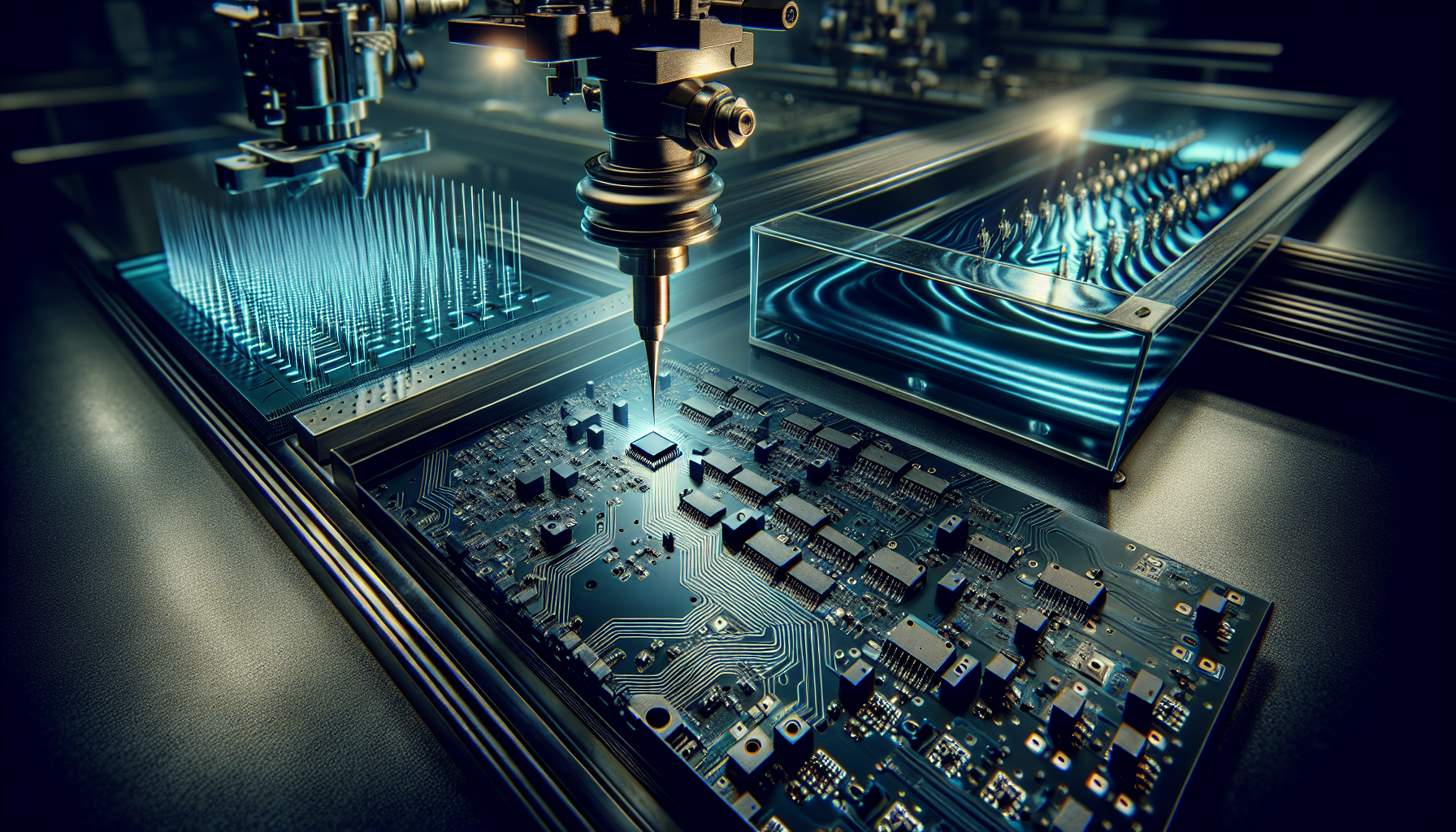
Selective spray uses programmable robotic systems to apply coating precisely where it is needed while keeping connectors, test points, and other keep-out areas clean. This is the preferred method for production volumes, offering high throughput with consistent quality.
Manual spray provides flexibility for low-volume production or boards with complex masking requirements. Skilled operators can achieve good results, but consistency depends on technique and training.
Dip coating immerses the entire board in coating material. It provides excellent coverage of all surfaces but requires thorough masking of any areas that must remain uncoated. Dip is efficient for boards with minimal keep-out areas.
Brush application is used for touch-up and small-quantity work. Coverage uniformity is the poorest of all methods, making it unsuitable for production.

Design Considerations for Coated Boards
Conformal coating must be considered during the design phase, not added as an afterthought. Connectors, switches, potentiometers, and other mechanical interfaces must be masked during coating application. Board layouts should group keep-out areas together to simplify masking. Test points needed for production testing must remain accessible.
Component selection matters too. Some components trap solvents or cleaning chemicals under their bodies, causing coating adhesion failures. Tall components create shadow areas that the coating spray cannot reach. Board designers working with coated assemblies need to understand these constraints.
When Your Product Needs Conformal Coating
Consider conformal coating if your product operates in any of these conditions: outdoor or uncontrolled environments, high humidity or condensation risk, exposure to dust or particulates, chemical or cleaning agent exposure, wide temperature cycling, salt spray environments, or any situation where moisture ingress could cause corrosion or leakage currents between conductors.
At Roanoke Electronic Controls, we apply conformal coating as part of our production assembly process. Our engineering team helps select the appropriate coating type and application method for your product's operating environment, and our production process includes UV inspection to verify complete and uniform coverage. Contact us to discuss environmental protection for your electronic product.
Ready to Build Your Custom Electronics?
From concept to production, Roanoke Electronic Controls delivers complete custom electronics manufacturing solutions.
Request a Quote