Most guides to choosing a contract electronics manufacturer read like a procurement checklist. This one is built from the questions buyers actually ask us at Roanoke Electronic Controls before they send a purchase order, with the answers we give and the answers you should expect from anyone you are evaluating.
Who will I actually talk to?
You should be talking to an engineer within the first two conversations. If every technical question routes through a salesperson who "will check with the team," that is how production problems will route too, and they will take days instead of minutes. At REC, the person who reviews your Gerbers is the person who answers the phone about them. Ask any manufacturer to name your technical contact before you sign, and ask what they did before this job.
How do I know they can really build my board?
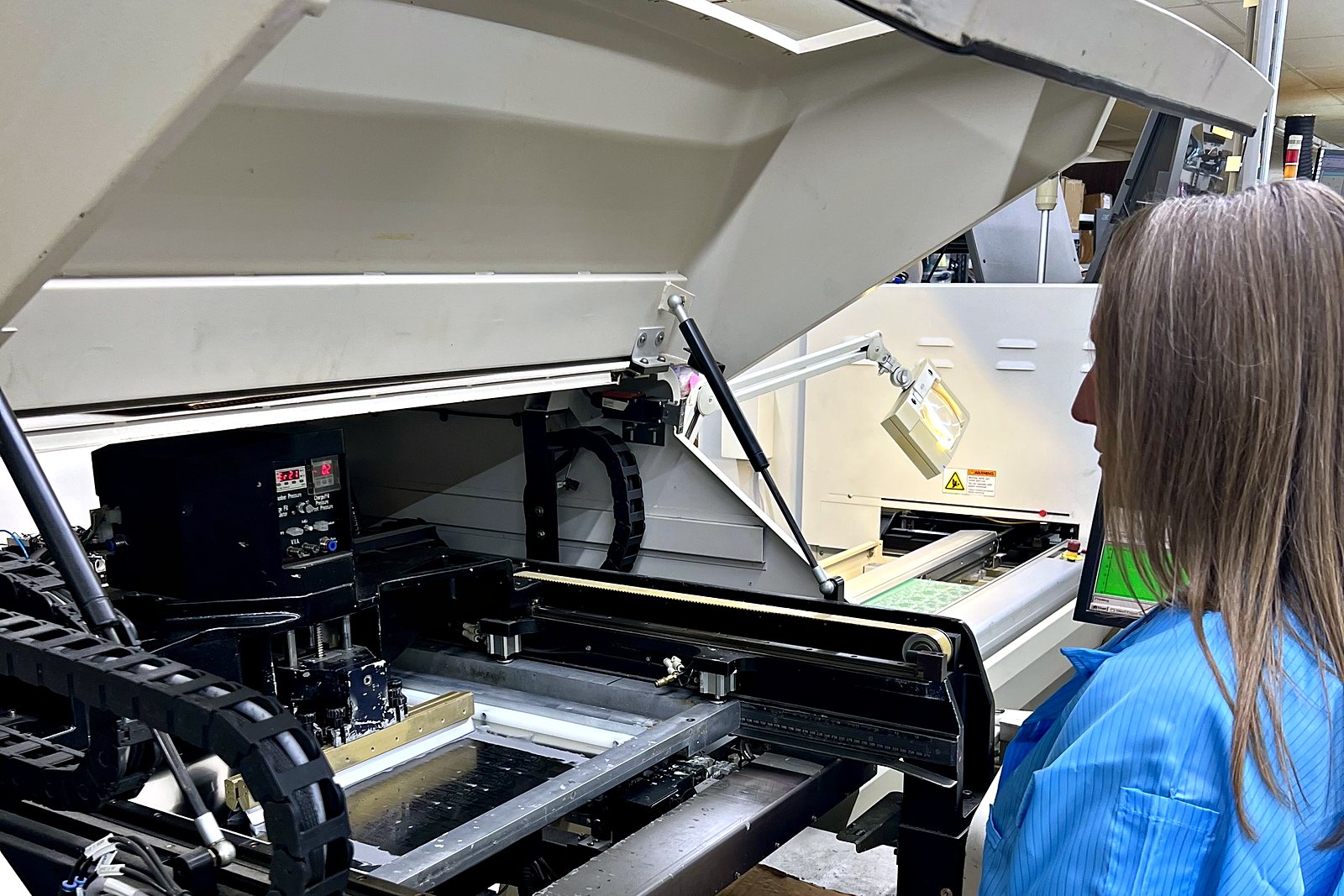
Ask for the specific numbers, then ask for a board that proves them. Finest pitch placed in the last year. Smallest passive. Whether BGA rework happens in-house or gets shipped out. Whether inspection is automated optical or someone with a loupe. A capable shop will answer in seconds and offer a floor tour. Our own numbers: two automated pick-and-place lines, leaded and lead-free wave soldering, selective soldering, full through-hole, AOI inspection, a dedicated BGA and QFP rework station, and 4 to 6 mil traces on boards up to 10 or more layers.
Then ask about utilization. A machine that runs twice a month is not maintained like a machine that runs every day, and nobody on staff is fluent in it.

What does ISO 9001 actually buy me?
The certificate itself buys you very little, because almost everyone has one. What it should buy you is answers to the next three questions: what is your first-pass yield on boards like mine, what happens to a board that fails test, and can I see the corrective action from your last real quality escape. A manufacturer with a working quality system has those on hand. A manufacturer with a framed certificate changes the subject.
REC has been registered to ANSI/ISO 9001:2015 for years, and the part that matters to you is that every production board gets 100 percent electrical test, not a sample, and a failure stops the lot until we know why.
Will they review my design or just build what I send?
Insist on design-for-manufacturability feedback before the first board is built, and treat silence as a warning. Either nobody looked, or nobody knew what to look for. Common catches on boards that arrive here: annular rings under 5 mil, copper within 10 mil of the board edge, no fiducials for the SMT line, solder mask dams under 4 mil between fine-pitch pads, and test points nobody can reach. Each one costs nothing to fix on a screen and real money to fix on a panel. Our DFM review comes with every quote at no charge, because it saves us as much time as it saves you.
What happens when a part goes unavailable?
This is the question that separates assembly houses from manufacturing partners. The answer you want is: we tell you the day we learn it, we propose a qualified alternate with the datasheet comparison already done, and we do not substitute anything without your written approval. The answer you do not want is a quiet substitution you discover in a field return. Ask how they verify component authenticity on the way in, too. Counterfeit parts are still a real problem, and incoming inspection is where they get caught.

How do I compare quotes that are far apart?
When one quote is dramatically lower than the rest, something was left out, and you should find out what before you celebrate. Usual suspects: test was quoted as a sample instead of 100 percent, a cheaper component grade was assumed, conformal coating or programming was omitted, or the price depends on a volume you have not committed to. Ask every bidder to state what is included in a single line each for fabrication, components, assembly, test, programming, coating, and packaging. Then the quotes line up.
Is a smaller manufacturer a risk?
The risk runs the other way more often than buyers expect. In a large factory, a 500-piece order is the first thing bumped when a 50,000-piece order runs late. In a shop sized for low to medium volume, that same order is the week's main event. The right fit is a manufacturer where your business matters and the equipment list still covers everything you need. Our sweet spot is prototype runs of 5 to 25 units through production of roughly 10,000 units a year per product, which is exactly where most custom controls live.
Where is the work done?
Ask for an address and whether anything is subcontracted. REC designs and builds in one facility in Roanoke, Alabama. Bare board fabrication is managed through long-standing partners, and every assembly, test, coating, and programming step happens on our floor, which is why we can promise a quote within one business day and a direct answer about where your boards are at any point.
What should I ask before I sign?
- Who is my technical contact, and what is their background?
- What is your lead time for a run like mine, prototype and production?
- What is your first-pass yield on comparable boards, and what happens to failures?
- What did your DFM review find on my files?
- How do you handle a part going on allocation mid-run?
- Can I visit the floor while my boards are being built?
- What happens if a quality issue shows up after shipment?
If the answers come quickly, specifically, and from someone who will still be on your project in six months, you have found a manufacturer rather than a vendor. If you would like to hear ours, tell us about your project or upload your Gerbers and we will have a quote and a DFM review back within one business day.

Ready to Build Your Custom Electronics?
From concept to production, Roanoke Electronic Controls delivers complete custom electronics manufacturing solutions.
Request a Quote