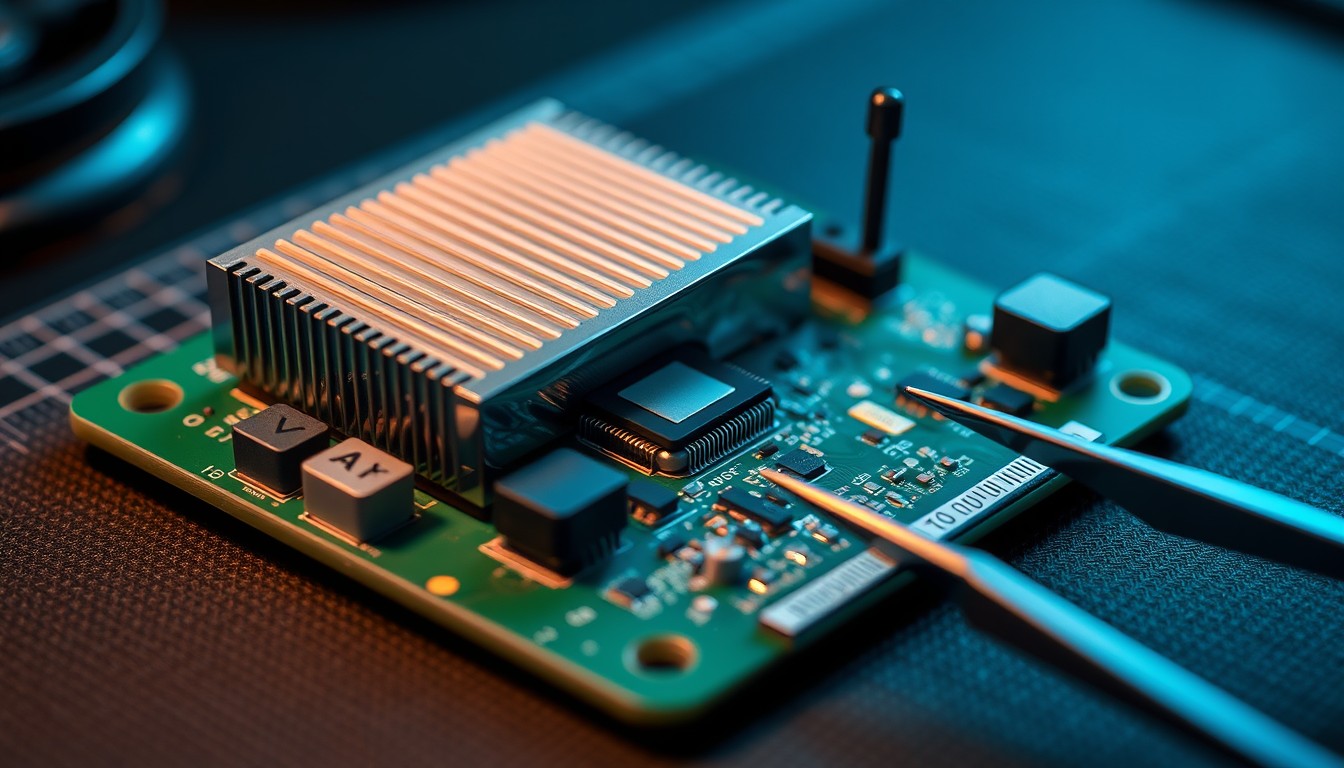
For the better part of a decade, the original ESP32 has been the workhorse behind our connected products. It gave us Wi-Fi, Bluetooth, and enough compute to run a real product on a part that cost less than a cup of coffee. Thousands of controllers we built on it are still running in the field today, taking over-the-air updates and reporting in to their apps every day.
But the wireless world hasn't stood still, and neither have we. Over the coming product cycles, Roanoke Electronic Controls is transitioning our connected controller platform to Espressif's ESP32-C5. This post explains what that chip is, why we chose it, and what the change means if you're one of our customers.
What the ESP32-C5 Brings to the Table
The ESP32-C5 is Espressif's first dual-band microcontroller. Where the original ESP32 lives entirely on the crowded 2.4 GHz band, the C5 speaks both 2.4 GHz and 5 GHz, and it does so with Wi-Fi 6 (802.11ax). It also carries Bluetooth 5 Low Energy and an IEEE 802.15.4 radio for Zigbee and Thread, all on a single RISC-V core running at up to 240 MHz.
On paper that's a spec sheet. In practice it solves real problems we've watched customers hit for years.
A Connection That Holds
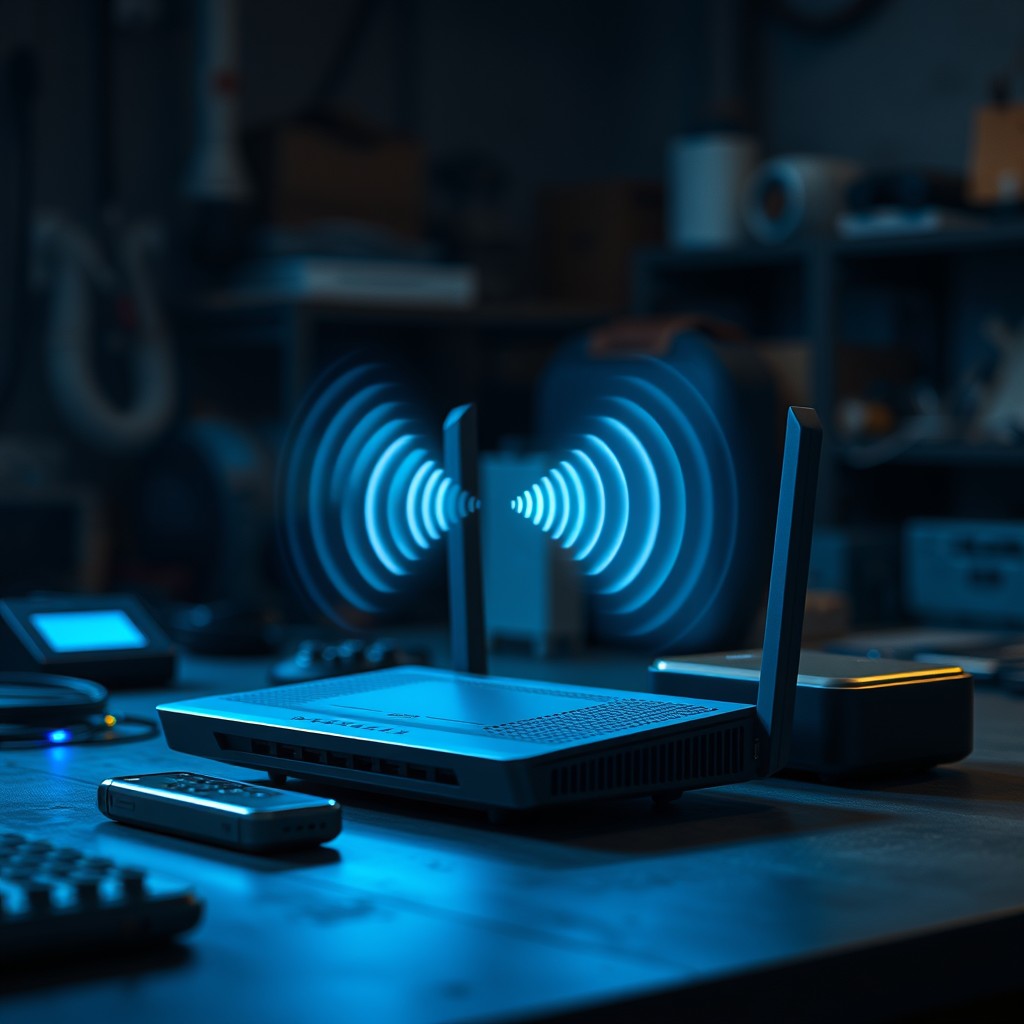
The most common support ticket on any connected appliance isn't a failed sensor or a bad relay. It's "my device dropped off Wi-Fi." The 2.4 GHz band is shared with every microwave, baby monitor, cordless phone, and neighbor's router within range. Products stuck on 2.4 GHz alone have no escape from that congestion.
Dual-band changes the equation. A controller built on the C5 can join a 5 GHz network where the air is cleaner, and Wi-Fi 6 features like OFDMA and Target Wake Time let it share the channel efficiently with the dozens of other devices in a modern home or commercial building. Fewer dropouts means fewer support calls, fewer negative reviews, and a product that simply feels more reliable to the end user.
Security You Can Stand Behind
Connected products are now a compliance topic, not just an engineering one. Cyber-resilience rules in the EU and evolving labeling programs in the US are pushing manufacturers toward hardware-backed security as a baseline expectation.
The ESP32-C5 ships with secure boot, flash encryption, a hardware digital-signature peripheral, and a true random number generator. Combined with Wi-Fi 6's WPA3 support, that gives us the foundation to guarantee that only firmware we signed can run on your controller, that credentials at rest are encrypted, and that the over-the-air update path can't be hijacked. These aren't features we bolt on afterward. They're designed into the platform from the first schematic.
Lower Power, Cooler Boards
Wi-Fi 6's Target Wake Time lets a device negotiate exactly when it needs to talk to the access point and sleep the rest of the time. For battery-backed or thermally constrained products, that's a meaningful reduction in average current draw and heat inside the enclosure. It also translates to a smaller, simpler power supply section, which is one less thing to go wrong.
Why Staying Current Matters to You
It would be easier, in the short term, to keep building what we've always built. We're making this move because of what it does for our customers over the life of a product.
Longevity of Supply
Every product we design is expected to ship for years, sometimes well over a decade. Choosing a processor at the front of its lifecycle rather than the tail means the part will still be available, in volume, when you're placing your fifth-year production order. Espressif backs the ESP32-C5 with a long-term availability commitment, and we design around that promise. Managing this kind of supply chain risk is part of what you're paying a contract manufacturer for.
Future-Proof Connectivity
Routers and phones are already Wi-Fi 6 and Wi-Fi 7. A product that only speaks 2.4 GHz Wi-Fi 4 works today, but every year it becomes the oldest device on the network. The C5 keeps your product compatible with the networks your customers actually run, and the Thread and Zigbee radio opens the door to Matter and smart-home ecosystems without a hardware redesign.
One Platform, One Codebase
Because the C5 runs the same ESP-IDF framework as the original ESP32, the firmware architecture, OTA system, and cloud integration we've refined over years of production carry forward. Our customers get the benefit of a mature, field-tested software stack on new silicon, not a rewrite from scratch.
What the Transition Looks Like
Nothing about this change requires action from existing customers. Products already in the field keep working, keep receiving updates, and keep being supported. Here is how we're handling it:
- New designs are being started on the ESP32-C5 by default.
- Existing designs will be evaluated individually. Where a board respin makes sense, we'll bring the change into a scheduled revision so it's transparent to production.
- Firmware compatibility is validated on both parts through our testing process, so a product line can run mixed hardware generations during the changeover.
- Apps and cloud services don't change. The device talks the same protocol to the same backend.
Built for the Long Haul
Choosing a microcontroller is one of the longest-lived decisions in an electronics product. It shapes the bill of materials, the security posture, the wireless experience, and the supply chain for every unit you'll ever ship. Moving to the ESP32-C5 is how we make sure that decision keeps paying off for our customers years after the first board comes off the line.
If you have a connected product in the field, on the bench, or on a whiteboard, tell us about your project. We'd be glad to walk through what the ESP32-C5 could mean for it.
Ready to Build Your Custom Electronics?
From concept to production, Roanoke Electronic Controls delivers complete custom electronics manufacturing solutions.
Request a Quote